OVERVIEW
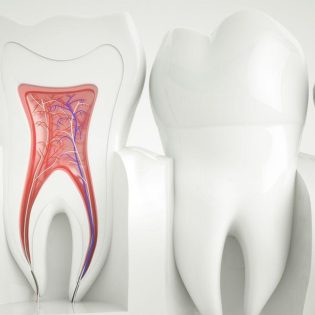
Severe toothache, gum swelling or sensitivity that lingers often means infection has reached the pulp inside the tooth. A root canal removes that infection and keeps the tooth in place, so you avoid an extraction.
At The Windsor Dental Practice, treatment is carried out by Dr Azeem Mirza (GDC No: 264265, BDS, BSc, Cert Implants), a senior dentist. We treat first-time root canals and retreatment of teeth that have been treated before, with same-day emergency appointments available for urgent pain.
Infection inside a tooth rarely settles on its own. These are the signs most often linked to a damaged or infected pulp.
Pressure on a tooth with an inflamed pulp or infected root tip causes pain when chewing.
Hot or cold discomfort that stays long after the drink is gone often points to nerve damage.
Swelling beside one tooth can mean infection is spreading from the root tip.
A grey or dark tooth after a knock or deep decay can mean the pulp has died.
A small bump, sometimes with a bad taste, is often an abscess draining.
Pain that wakes you suggests the nerve is under pressure from infection.
A cracked tooth or an older root filling can also let bacteria in, which is where retreatment helps. Pain can suddenly ease when the nerve dies, but the infection stays and keeps spreading, so a tooth that has gone quiet still needs checking.
Root canal treatment, also called endodontic treatment, removes infected pulp from inside the tooth. The pulp holds nerves and blood vessels, and bacteria can reach it through deep decay, cracks or trauma.
Left untreated, the infection can spread to the root tip and form an abscess, which may damage the surrounding bone. Cleaning and sealing the canals stops the infection at its source and protects the tooth for the long term.
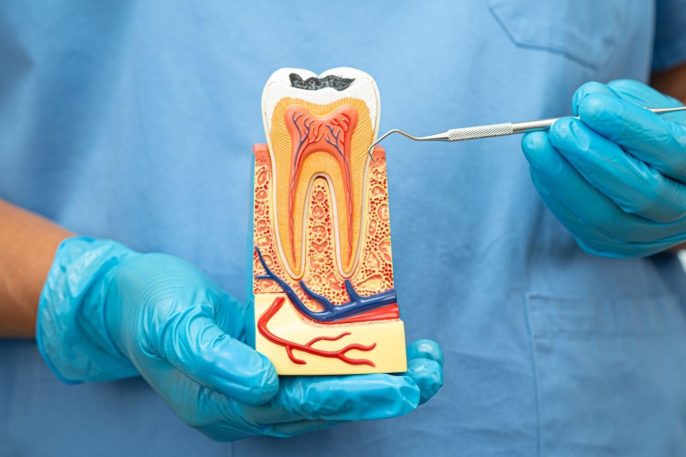
When a tooth is badly infected, the choice is usually between saving it or removing it. If enough healthy tooth structure remains, saving it is generally the better first option.
When extraction is the better option. Some teeth cannot be saved, such as a tooth with a vertical root fracture, too little healthy structure left to restore, or severe bone loss around the root.
In these cases, tooth extraction may be recommended, and a dental implant can replace the tooth afterwards. Before advising either route, Dr Azeem assesses the tooth with digital X-rays and, where needed, our in-house CBCT 3D scan.
Most root canals take one to two visits, depending on the tooth and how far the infection has spread. Back teeth have more canals, so they can take longer.
Dr Azeem examines the tooth and takes digital X-rays to see the root shape and any infection at the tip. Where the anatomy is complex, our in-house CBCT 3D scan gives a clearer view.
The tooth and surrounding gum are numbed before treatment starts.
A small opening is made in the top of the tooth, and the infected pulp is removed from the pulp chamber and canals.
The canals are cleaned, disinfected and shaped using microscope magnification, which helps reach narrow or hidden canals and removes bacteria that could cause reinfection.
The cleaned canals are filled and sealed with a biocompatible material. This blocks bacteria from re-entering and protects the root.
Many patients expect a root canal to be painful. In practice, the treatment itself feels similar to having a filling, because the tooth is fully numbed first.
Infected teeth can be harder to numb. Inflammation changes how local anaesthetic works, so a badly infected tooth sometimes needs extra time or an additional dose. This is normal.
If you feel anxious, needle fear or a strong gag reflex should not stop you saving a tooth. We offer IV sedation for nervous patients, so you stay deeply relaxed while treatment is completed. You will need an adult to take you home afterwards.
Do you need a crown? Back teeth usually do, because a tooth with a root filling is more brittle. A dental crown restores strength and helps it last, and regular dental check-ups let your dentist keep an eye on the tooth over time.
A root canal goes best when you trust the person doing it. Here is what you can expect from us.

Rated 4.7 on Google by patients across Leicester.
QUESTIONS ABOUT
The tooth is numbed first, so the treatment itself feels similar to having a filling. Mild tenderness for a few days afterwards is normal.
Most take one to two visits. A front tooth is usually quicker, while back teeth with several canals take longer.
Wait until the numbness has worn off, then eat softly and chew on the other side until the tooth has its permanent restoration.
After local anaesthetic alone, most patients can drive once they feel comfortable. After IV sedation, you must not drive and need someone to take you home.
Back teeth usually do, because a root-filled tooth is more brittle. Your dentist will advise based on how much healthy tooth remains.
The infection can spread to the root tip, form an abscess and damage the surrounding bone, and may eventually lead to losing the tooth. Pain that fades does not mean the infection has gone.
Often, yes. Retreatment removes the old filling, cleans the canals again and reseals the tooth, and can avoid extraction.
TREATMENT
from £295
The cost of root canal treatment in Leicester starts from £295, depending on the condition of the tooth and the complexity of the procedure.
What affects the cost:
We believe in providing high quality and ethical dentistry to our patients, whilst providing bespoke treatments to cater for all their needs.
Dr Azeem Mirza
FRIENDLY & EXPERIENCED EXPERT TEAM

4.7 STAR GOOGLE RATING
YEARS OF EXPERIENCE
The Windsor Dental Practice is at 146 Melton Road, Leicester LE4 5EE. If you are searching for root canal treatment near you, we welcome patients from Oadby, Wigston, Clarendon Park, Hamilton and Thurmaston, as well as across Leicester.
If you’re experiencing tooth pain or signs of infection, early treatment can help prevent further complications and save your natural tooth.