Many people skip flossing or wonder whether it is really necessary, especially if they brush regularly. However, flossing plays a crucial role in maintaining oral health by removing plaque and food particles from areas that a toothbrush cannot reach. This article will explore the benefits of flossing, the risks associated with skipping it, and best practices to help you incorporate flossing effectively into your daily oral care routine.
Why Flossing Matters
Flossing is an essential part of oral hygiene because it reaches areas that brushing alone cannot. The spaces between your teeth and along the gumline are particularly prone to plaque and food particle buildup, which can lead to cavities, gum inflammation, and bad breath if not cleaned regularly.
By removing plaque before it hardens into tartar, flossing helps prevent gingivitis the early stage of gum disease and supports overall oral health. Consistent flossing also reduces the risk of more serious dental issues such as periodontitis, tooth decay, and even tooth loss. Incorporating flossing into your daily routine ensures a cleaner mouth, fresher breath, and healthier gums over the long term.
What Happens If You Don’t Floss Daily
Neglecting daily flossing allows plaque and food particles to accumulate between teeth and along the gumline areas your toothbrush can’t fully reach. Over time, this buildup can lead to cavities, gum irritation, and inflammation.
Failing to floss regularly increases the risk of gum disease, which may present as bleeding, swelling, or tenderness in the gums. If left untreated, gum disease can progress to periodontitis, causing bone loss, loosening of teeth, and ultimately tooth loss.
While occasional flossing is better than none, daily flossing is the most effective way to prevent plaque accumulation, maintain healthy gums, and protect your teeth from long-term damage. Establishing a consistent flossing habit is key to achieving optimal oral health.
Benefits of Daily Flossing
Incorporating flossing into your daily oral care routine offers a range of benefits that go beyond what brushing alone can achieve:
Maintains Healthy Gums
Flossing removes plaque and debris from between teeth and along the gumline, reducing inflammation and lowering the risk of gingivitis. Healthy gums not only prevent bleeding and discomfort but also support overall oral structure.
Reduces Tartar Buildup
Regular flossing prevents plaque from hardening into tartar, which is more difficult to remove and often requires professional cleaning. This helps avoid unnecessary dental procedures and associated costs.
Enhances Brushing Effectiveness
Flossing reaches areas that toothbrushes cannot, ensuring a more thorough clean. This comprehensive approach minimizes bacterial buildup and keeps your mouth healthier.
Promotes Fresher Breath
Food particles and bacteria trapped between teeth are a common cause of bad breath. Daily flossing removes these particles, leaving your mouth feeling clean and fresh.
Prevents Long-Term Dental Issues
Consistent flossing helps protect against cavities, gum disease, and potential tooth loss, supporting long-term oral health. By preventing problems early, you can reduce the need for extensive restorative treatments in the future.
Supports Overall Health
Studies have linked oral health to overall well-being, including cardiovascular health and diabetes management. By maintaining healthy gums through flossing, you contribute to better systemic health.
Improves Confidence and Comfort
Healthy teeth and gums reduce discomfort from inflammation or decay and help you feel more confident in social and professional situations. A cleaner mouth also improves the appearance of your smile.
Encourages Mindful Oral Care
Flossing daily fosters a routine of attentive oral hygiene, encouraging awareness of changes in your mouth such as early signs of cavities, gum disease, or oral lesions.
By making flossing a daily habit, you not only maintain healthy teeth and gums but also enhance your overall oral health, prevent costly problems, and enjoy a fresher, more confident smile.
Proper Flossing Technique
Flossing may seem simple, but using the correct technique is key to ensuring it’s both effective and gentle on your gums. Here’s how to do it properly:
Use Enough Floss:
Start with about 18 inches (45 cm) of dental floss. Wrap most of it around one middle finger, and the rest around the opposite finger. This allows you to unwind clean sections as you move from tooth to tooth.
Hold It Firmly:
Grip the floss tightly between your thumbs and index fingers, leaving about 1–2 inches of floss to work with.
Gently Guide Between Teeth:
Carefully slide the floss between your teeth using a gentle back-and-forth motion. Avoid snapping or forcing it down, as this can injure your gums.
Curve Around Each Tooth:
Once the floss reaches the gumline, curve it into a “C” shape around one tooth. Gently move it up and down, cleaning the side of the tooth and just under the gumline where plaque tends to accumulate.
Repeat for Each Tooth:
Use a clean section of floss for each tooth and remember to floss both sides of every tooth, including behind your back molars, which are often overlooked.
Rinse Afterwards:
After flossing, rinse your mouth with water or mouthwash to remove loosened debris and bacteria.
Bonus Tips:
- Floss once a day, preferably before brushing, to allow fluoride from toothpaste to reach between teeth.
- If traditional floss is difficult to use, consider floss picks, interdental brushes, or water flossers these can be just as effective when used correctly.
- Be gentle, especially if you’re new to flossing; minor gum bleeding is normal at first and usually stops as your gums become healthier.
- By following these steps consistently, you’ll remove hidden plaque, protect your gums, and enjoy a cleaner, healthier smile.
Alternative Flossing Methods
Not everyone finds traditional string floss easy or comfortable to use and that’s perfectly fine. The goal of flossing is simple: to remove plaque and food particles from between your teeth and along the gumline. Fortunately, there are several effective alternatives to help you maintain excellent oral hygiene.
Dental Picks and Floss Picks:
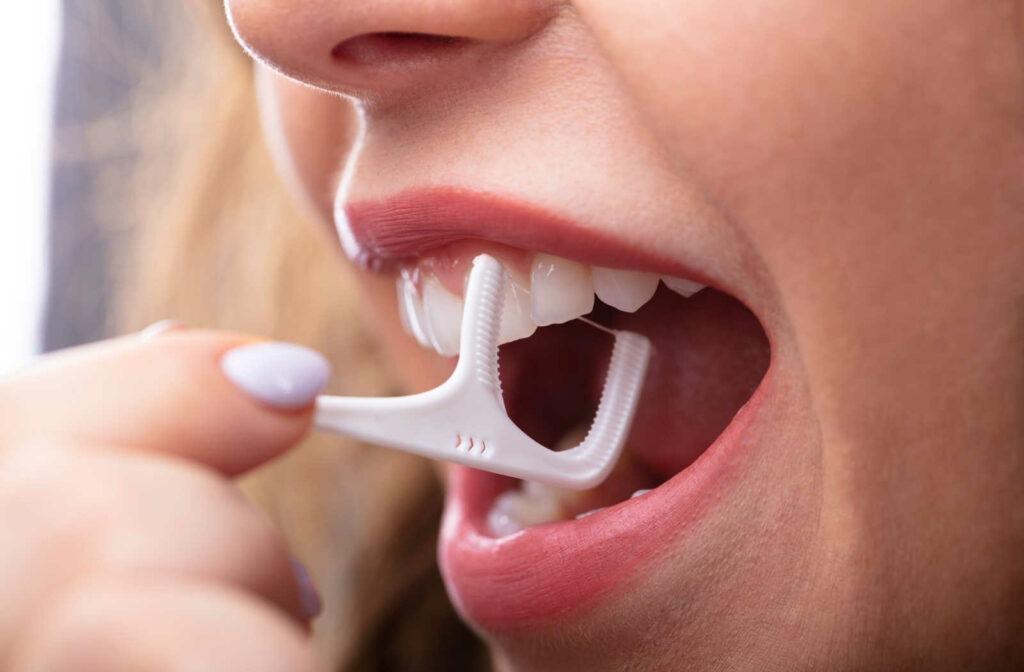
These small, disposable tools feature a short piece of floss stretched between two prongs, making them easier to handle than traditional floss. They’re great for people with limited dexterity or those who find string floss messy or awkward. Dental picks also make on-the-go cleaning quick and convenient.
Interdental Brushes:
Interdental brushes are tiny, cone-shaped brushes designed to clean between teeth and around dental work such as braces, bridges, or implants. They come in various sizes to fit different spaces and can be more effective than floss for people with wider gaps or gum recession.
Water Flossers (Oral Irrigators):
Water flossers use a gentle stream of pulsating water to remove plaque, food particles, and bacteria from between teeth and below the gumline. They are particularly helpful for people with braces, dental implants, or sensitive gums, and they also help stimulate gum tissue to improve circulation and health.
Air Flossers and Other Electronic Devices:
Some devices use bursts of air combined with micro-droplets of water or mouthwash to clean between teeth. While not as powerful as water flossers, they can still be a helpful option for those seeking a quick, gentle method.
Floss Threaders:
Floss threaders are small, flexible loops that help guide floss between braces, bridges, or tight dental work. They allow for precise cleaning where standard floss might not reach.
The Bottom Line
Whether you prefer traditional floss, a water flosser, or an interdental brush, the key is consistency. Removing plaque daily helps prevent cavities, gum disease, and bad breath no matter which tool you choose.
By finding a flossing method that suits your needs and comfort level, you can keep your smile healthy and clean with minimal effort.
How Often Should You Floss?

Consistency is more important than perfection when it comes to flossing. The American Dental Association (ADA) recommends flossing at least once a day to maintain healthy gums and prevent the buildup of plaque between teeth.
Daily Flossing Is Ideal
Flossing once every day ideally before brushing at night helps remove food particles and bacteria that can cause gum disease and decay. Making it part of your daily routine ensures your gums stay strong and your teeth clean.
If Daily Flossing Isn’t Possible
Even if you can’t floss every day, try to do it several times a week. Any consistent effort reduces plaque buildup and inflammation, which are key contributors to gum disease. The goal is to keep interdental spaces clean regularly, not necessarily perfectly.
The Bottom Line
Whether you use traditional floss, interdental brushes, or a water flosser, what matters most is sticking to a routine. Consistent flossing done gently and correctly can make a significant difference in your oral health over time.
Tips to Make Flossing Easier
Flossing doesn’t have to feel like a chore. With a few smart habits and the right tools, you can make it a simple, effortless part of your daily routine.
Floss at the Same Time Each Day
Building consistency is key. Try flossing at the same time every day such as before bed or after your morning brushing. Making it a scheduled habit helps turn flossing into a natural part of your oral care routine.
Choose Flavored or Comfortable Floss
If you find flossing unpleasant, try mint-flavored or waxed floss, which slides more easily between teeth and leaves your mouth feeling fresh. Small changes like this can make the process more enjoyable and encourage consistency.
Use Floss Holders or Picks for Convenience
For those who struggle with traditional string floss, floss holders, dental picks, or water flossers are great alternatives. They make it easier to reach back teeth and save time especially for people with braces or limited dexterity.
Pair Flossing with Brushing
Keep your floss next to your toothbrush as a visual reminder. Flossing right before brushing helps remove debris first, allowing fluoride from toothpaste to reach more surfaces effectively.
Stay Consistent, Not Perfect
If you occasionally miss a day, don’t get discouraged just get back on track the next day. The key is regularity and commitment to long-term oral health.
Conclusion
Flossing may seem like a small step, but it plays a powerful role in maintaining healthy teeth and gums. By spending just a few minutes each day to clean between your teeth, you can prevent plaque buildup, gum disease, bad breath, and even costly dental treatments down the road. Daily flossing is one of the simplest and most effective ways to protect your smile. Whether you prefer traditional string floss, a water flosser, or interdental brushes, the key is finding a method that fits your lifestyle and sticking with it. Remember consistency matters more than perfection. Incorporating flossing into your daily routine not only enhances your oral hygiene but also keeps your smile fresh, strong, and confident for years to come.